
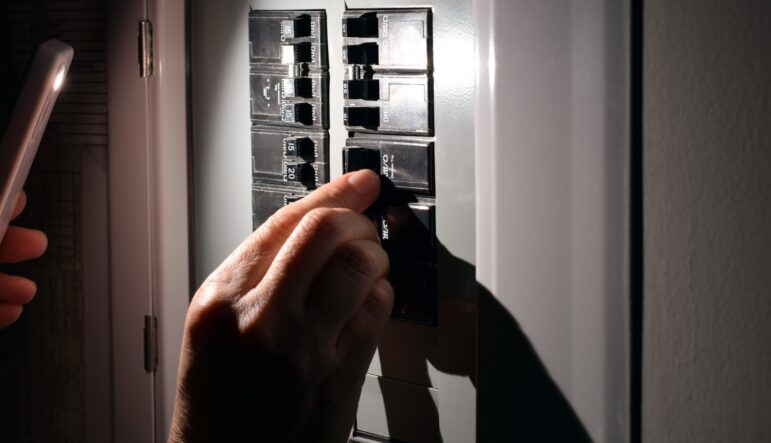
Your electrical panel may not be something you think about often, but it plays a central role in safely delivering power throughout your home. As households add electric vehicles, larger appliances, home offices, battery storage, and other electrical technology, homeowners may expect more from their electrical systems than previous generations did.
Older homes may still rely on fuse boxes, while modern homes generally use circuit breaker panels. Today, smart electrical panels add another option by combining traditional circuit protection with advanced energy monitoring and control. Understanding how these systems differ can help you determine whether your current setup still fits the way you use electricity.
Fuse boxes were commonly installed in older homes and protect individual electrical circuits from carrying more current than they are designed to handle. A fuse contains a filament that melts when the circuit becomes overloaded, interrupting the electrical flow. Once a fuse blows, it must be replaced with another fuse of the correct amperage [1].
Using an incorrectly sized fuse can create a serious safety problem. Installing a fuse rated higher than the circuit is designed to handle can increase the risk of overheating and fire.
While fuse boxes provide basic circuit protection, they cannot monitor household energy consumption or give homeowners remote control over individual circuits.
Circuit breakers perform a similar protective function but are easier to restore after an electrical issue. Unlike a blown fuse that must be replaced, a circuit breaker can usually be reset after it trips once the source of the overload has been corrected [2].
Modern electrical service also reflects the greater energy demands of today’s homes. Older fuse panels were commonly associated with 30- or 60-amp electrical service, while newer homes generally require significantly greater service capacity [2].
However, a traditional breaker panel is still primarily designed to distribute electricity and protect circuits. It generally does not provide detailed insight into how much electricity individual areas of the home are consuming.
Smart panels take electrical management beyond basic circuit protection by adding digital monitoring and control.
One major advantage is circuit-level energy monitoring, which can give homeowners much more detailed information about where electricity is being used throughout the home [3]. Instead of seeing only total household consumption, homeowners can gain insight into the loads associated with individual circuits.
Many smart panels also connect to smartphone applications. Connected smart panels can allow homeowners to monitor electricity use and remotely control individual circuits through a mobile device [4]. This can make it easier to identify unnecessary energy use or temporarily turn off nonessential loads.
These capabilities become particularly valuable when a smart panel is paired with compatible battery backup. During a power outage, homeowners can prioritize important circuits and remotely change which circuits receive stored battery power [4, 5]. For example, a homeowner may choose to prioritize refrigeration, HVAC equipment, or a home office while temporarily disabling less important loads.
Smart panels can also help manage overall electrical demand. Research into smart panel-based home energy management systems has explored using circuit-level power measurements and automated household load control to reduce energy costs and improve resilience during extreme events [3].
It is important to remember that a smart electrical panel does not generate backup electricity itself. Outage management depends on pairing the panel with a compatible power source, such as a home battery or generator.
Having a fuse box does not automatically mean your home’s electrical system is unsafe. Its age, condition, available capacity, wiring, and the electrical demands of your household all matter.
Homeowners may want to consider an electrical evaluation if they frequently experience blown fuses, are adding high-demand equipment such as an EV charger, are planning solar or battery storage, or want advanced features like circuit-level monitoring and remote electrical control.
A licensed electrician can assess the existing system and determine whether a conventional breaker-panel upgrade or a smart electrical panel is the better fit.
Today’s households rely on electricity differently than homes did decades ago. Whether you have an aging fuse box, need additional electrical capacity, or want greater visibility and control over your home’s energy use, the right panel can help prepare your electrical system for current and future demands.
Contact CoreTrade Electric today to schedule an electrical system evaluation and learn whether a traditional panel upgrade or smart electrical panel is the right solution for your home.
Sources: