
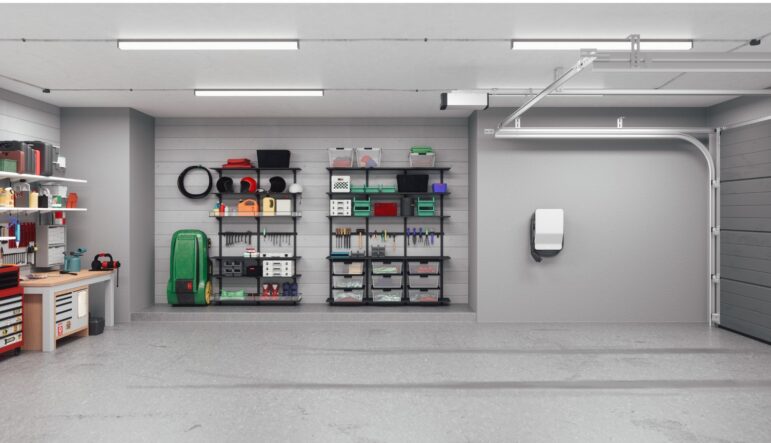
Today’s garages often do much more than store vehicles. From power tools and refrigerators to freezers, battery chargers, and even electric vehicle charging equipment, garages can place significant demands on a home’s electrical system. As those needs grow, it is important to recognize the warning signs of potential electrical problems before they become serious safety hazards.
In no particular order, here are some signs and causes of possible electrical issues in your garage.
A circuit breaker is designed to protect your home’s electrical system by shutting off power when a circuit becomes overloaded or a fault is detected. If your garage breaker trips repeatedly while using tools or other equipment, it may be a sign that the circuit is overloaded or another electrical issue needs attention [1, 2]. Resetting the breaker without addressing the underlying cause can increase safety risks and lead to more serious problems over time.
Have you noticed the garage lights dimming when you start a table saw, air compressor, or other large appliance? Flickering or dimming lights can indicate that your electrical system is struggling to keep up with the electrical demand [1, 3]. While occasional fluctuations may seem minor, consistent dimming should be evaluated by a qualified electrician.
Some warning signs should never be ignored. Warm or discolored outlets, burning odors, buzzing sounds, or even a mild electrical shock from an outlet or switch may point to a potentially dangerous wiring problem [3, 4]. If you notice any of these symptoms, stop using the affected outlet and have your electrical system inspected as soon as possible.
Extension cords are helpful for temporary projects, but they are not intended to replace permanent wiring or provide a long-term power solution [5]. If your garage relies on multiple extension cords or power strips just to operate everyday equipment, it may be a sign that you need additional outlets or dedicated circuits. Upgrading your electrical system is a much safer solution than continuously stretching its limits.
Many garages were not originally designed to support today’s electrical demands. Adding workshop equipment, large appliances, or a Level 2 electric vehicle charger may require additional electrical capacity or dedicated circuits [6]. Having your electrical system evaluated before adding new equipment can help ensure it is prepared to safely handle the increased load.
Garages are one of the areas of the home where electricity and moisture can easily come into contact. Ground Fault Circuit Interrupter (GFCI) outlets are designed to quickly shut off power if a ground fault is detected, helping reduce the risk of electrical shock [2]. If you’re unsure whether your garage has the proper GFCI protection or your outlets are not functioning correctly, it is worth having them inspected by a licensed electrician.
Whether your garage serves as a workshop, storage space, or charging station, your electrical system should be able to safely support the way you use it.
If you’ve noticed tripped breakers, flickering lights, outdated outlets, or you’re planning to add new electrical equipment, contact CoreTrade Electric today to schedule a professional electrical inspection.
Our experienced team can identify potential hazards, recommend the right upgrades, and help ensure your garage is equipped to safely handle today’s electrical demands.
Sources: