
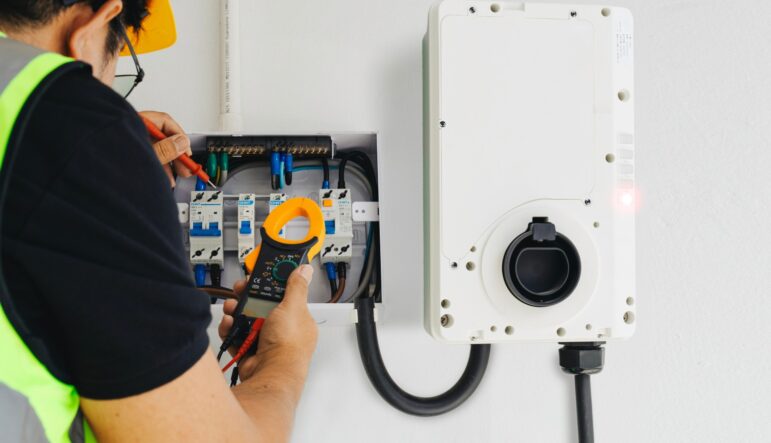
Installing a home electric vehicle charger is one of the most convenient upgrades you can make as an EV owner. However, in Virginia, the process involves more than just plugging in a new device. Understanding permit requirements, local regulations, and installation steps is essential to ensure your system is safe, compliant, and built to last.
In most cases, installing a home EV charger will require an electrical permit. This is especially true when new wiring or circuits are involved. For example, electrical permits are required when adding new circuits, outlets, or hardwired charging systems [1], which is common for Level 2 chargers.
However, there are exceptions. If your charger simply plugs into an existing outlet that already meets capacity requirements, a permit may not be required for cord-and-plug installations using existing circuits [2]. That said, most homeowners opt for a dedicated circuit to support faster and safer charging.
Electrical permits ensure that your installation meets safety standards and building codes. In Virginia, EV charger installations must follow the National Electrical Code and local county requirements. During the process, you may need to submit documentation such as:
For larger or more complex systems, plans may be required showing conductor sizes, overcurrent protection, and system design details [3]. These requirements help ensure your electrical system can safely handle the added load of EV charging.
Permit requirements are not a one-size-fits-all across Virginia. Local jurisdictions like Fairfax County, Arlington County, and Prince William County each have their own processes.
In many Northern Virginia counties, homeowners can apply for permits themselves, but it is strongly recommended that a licensed contractor handle the application and work [1]. This helps ensure compliance and reduces the risk of delays or failed inspections.
Additionally, some locations require extra approvals. For example, certain towns or historic districts may require additional review before installation, typically if the charger is visible or affects the property’s exterior.
If you live in a condo or community with a homeowners association, there are additional factors to consider. Virginia law generally protects your right to install a charger, meaning associations cannot outright prohibit EV charger installations in designated spaces [4].
However, they can still impose reasonable conditions. These may include:
This means it is important to coordinate with your HOA early in the process to avoid delays.
Once your permit is approved, installation can begin. A typical process includes:
After installation, an inspection is required before the charger can be used to ensure it meets code and safety standards [5]. This final step is critical, as it verifies that the system is properly installed and safe for long-term use.
While it may be tempting to handle parts of the process yourself, EV charger installation involves complex electrical work. From load calculations to code compliance, small mistakes can lead to major safety risks.
Working with a licensed electrician ensures your charger is installed correctly, permitted properly, and ready for inspection without issues. It also helps future-proof your system as EV technology continues to evolve.
Installing a home EV charger should be exciting, not stressful. With the right guidance, navigating Virginia’s permit requirements and installation process becomes straightforward and manageable.
Let CoreTrade Electric handle the details from permits to final inspection so you can focus on enjoying the convenience of charging at home. Reach out today to schedule your EV charger installation and get expert support every step of the way.
Sources: