
Takeaways
The harsh conditions of winter are the primary culprit behind spring electrical failures in Northern Virginia homes. While an outlet may have worked perfectly last autumn, the constant cycle of freezing, thawing, and exposure to moisture, which we’ve truly experienced this winter, can take a severe toll.
Tip: Seal Gaps to Prevent Internal Damage
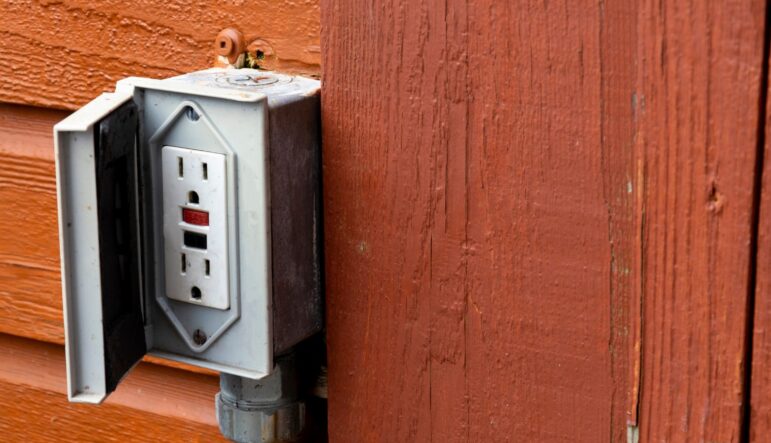
Even with protective covers, minute cracks in the plastic housing, deterioration of the caulking, or a faulty gasket allow moisture to seep inside the outlet box during winter. As this water freezes and expands, it stresses the components. When spring arrives, the melting ice leaves behind corrosion on the wiring terminals and contacts. This oxidation increases resistance, which causes the outlet to overheat, trip the circuit, or simply cease functioning. This is the single most common cause of springtime home electrical hazards related to your exterior.
Tip: Watch for Subtle Signs of Wire Damage
Heavy snowfall, ice buildup, and even pressure washing in the early spring can inflict physical damage. The most common sign is a cracked faceplate or a loose junction box. Critically, these events can also cause internal wiring connections to become loose. A loose connection creates arcing, which generates intense heat and is a major fire risk. If you notice a flickering light or hear a buzzing sound when using an outdoor electrical outlet, discontinue use immediately.
Tip: Investigate, Never Just Reset, a Tripped GFCI
A common mistake is to repeatedly press the ‘Reset’ button without investigating why the GFCI tripped in the first place. Continuous tripping is a clear indicator of a current leak, often due to the water damage and corrosion described above. Persistent GFCI faults are a serious home electrical hazard and require professional attention to identify the source of the short circuit.
Tip: Upgrade to In-Use Bubble Covers
Many older homes in Northern VA have basic, flip-up outlet covers that offer minimal protection. These covers are inadequate, especially in wet climates. Homeowners often miss the need to upgrade to “in-use” or “bubble” covers. These covers create a sealed enclosure that allows the outlet to be used safely while a plug is inserted, providing maximum protection against rain and snow. Inspecting and replacing old or damaged covers is a simple, cost-effective step to mitigating springtime home electrical hazards.
To ensure a safe and successful season, CoreTrade Electric recommends scheduling a comprehensive exterior electrical inspection this spring. A qualified electrician can test all GFCI outlets, inspect for water damage, and secure any loose connections to protect your family and your property from unnecessary home electrical hazards. Don’t risk it, spring into safety with a professional inspection with our licensed Northern Virginia electricians today.