
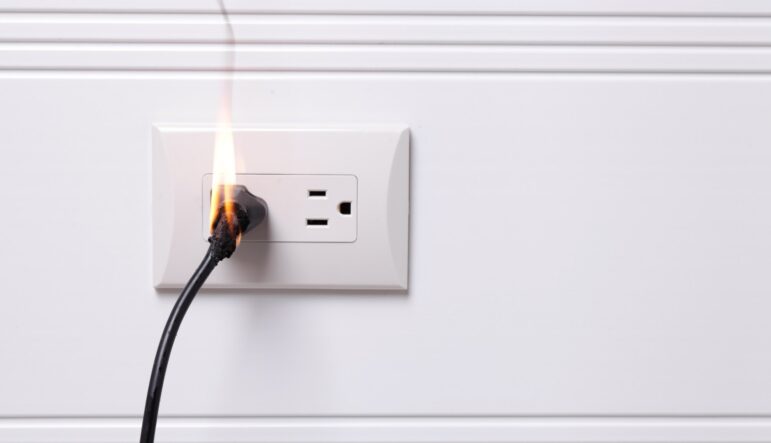
Electrical systems power nearly every part of modern homes, but when wiring, outlets, appliances, or electrical components are damaged or overloaded, they can quickly become serious fire hazards. Many electrical fires start from common household issues that homeowners may overlook until significant damage occurs. Understanding the most common causes of electrical fires can help protect your home, family, and property.
Here are some of the most common causes of home electrical fires.
Overloading outlets and circuits is one of the most common electrical fires and homes. Plugging too many devices into a single outlet, power strip, or extension cord can generate excessive heat and increase the risk of ignition. Homes built decades ago may also struggle to handle the demands of modern electronics and appliances.
Some warning signs of an overloaded electrical system include frequent tripping of circuit breakers, dimming lights, buzzing outlets, and discolored outlets [1]. If these issues occur regularly, it may be time to have your electrical system professionally evaluated.
Worn or damaged cords can expose electrical wiring and create dangerous fire hazards. Frayed wires, cracked cords, pinched cables, and damaged plugs should never be ignored. Electrical cords placed under rugs, carpets, or furniture can also become damaged over time without homeowners noticing.
Appliances with cracked, damaged, or loose cords should be replaced, and damaged extension cords should be discarded immediately to reduce fire risks [2].
Extension cords and power strips are designed for temporary use, but many homeowners rely on them long term. Overloading power strips or using extension cords with major appliances can cause overheating and increase the chance of electrical fires.
Major appliances like refrigerators, stoves, washers, and dryers should always be plugged directly into wall outlets. Using extension cords for these appliances can create dangerous conditions behind walls or furniture where overheating may go unnoticed.
Portable space heaters are another common cause of residential fires, especially during colder months. Heating equipment remains a leading cause of home fires, with many incidents occurring during the winter season when heaters are used more frequently.
Space heaters should always be kept at least three feet away from anything that can burn, including curtains, bedding, furniture, and paper products [3]. They should also be plugged directly into wall outlets rather than extension cords or power strips. Leaving space heaters unattended or operating while sleeping can significantly increase fire risks.
Electrical outlets and switches can show warning signs before a fire occurs. Hot outlets, flickering lights, buzzing sounds, or plugs that no longer fit securely may indicate wiring problems or failing electrical components.
Homeowners should also avoid forcing three-prong plugs into two-slot outlets, as improper connections can create unsafe electrical conditions. Addressing these issues early can help prevent larger electrical failures later.
Many electrical problems develop gradually over time, especially in older homes. Since many existing homes cannot handle the demands of today’s electrical appliances and devices [1], regular inspections are important for identifying outdated wiring, overloaded circuits, and other hidden hazards.
Homes older than 40 years, homes undergoing renovations, or homes with recently installed high energy appliances may benefit from professional electrical inspections to ensure the system remains safe and up to code.
Electrical fire hazards should never be ignored. Whether your home has aging wiring, overloaded circuits, damaged outlets, or other electrical concerns, professional service can help identify and resolve problems before they become dangerous. CoreTrade Electric provides trusted electrical inspections, repairs, and upgrades to help homeowners improve safety and reduce fire risks. For reliable electrical solutions that help protect your home and family, connect with CoreTrade Electric today.
Sources: